Smoking and Acid Reflux: Why Heartburn Follows Cigarettes
Smoking relaxes the valve at the top of your stomach and cuts the saliva that neutralises acid. Reflux commonly improves within weeks of stopping.
Quick answer
Smoking attacks reflux from two directions. It reduces the tone of the lower oesophageal sphincter, the valve that keeps stomach contents down, and it reduces saliva production, which normally neutralises acid that escapes. Reflux commonly improves within weeks of stopping.
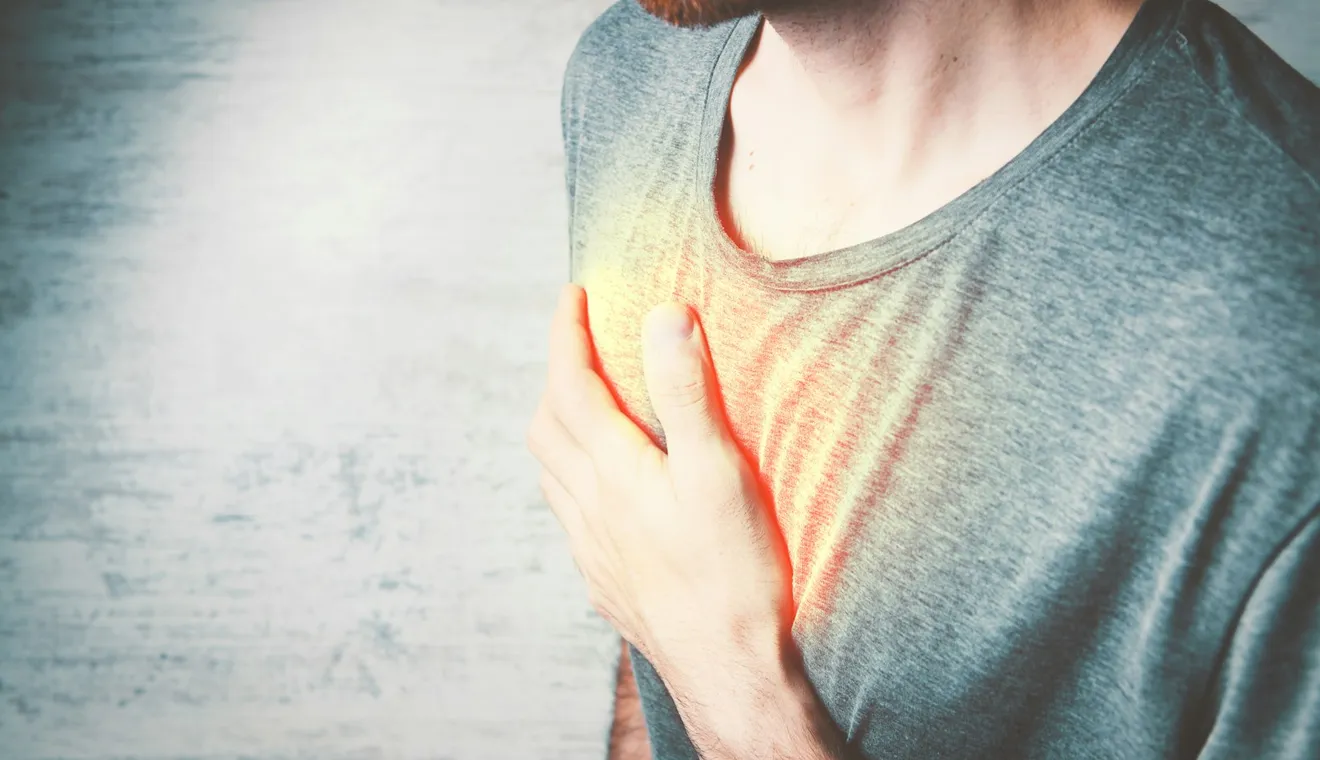
Everyone knows about lungs. Almost nobody is told that the burning in their chest after dinner is connected to the cigarette they had with the coffee afterwards.
The connection is direct, mechanical, and unusually satisfying to understand - because once you see it, you can predict exactly which cigarettes cause it.
Two valves, one problem
At the bottom of your oesophagus, where it joins your stomach, there is a ring of muscle: the lower oesophageal sphincter. Its job is to open when food arrives and stay shut the rest of the time, keeping stomach acid where stomach acid belongs.
Smoking reduces its tone. A weaker valve means it does not seal as reliably, and stomach contents get up into the oesophagus - which, unlike your stomach, has no protective lining against acid.
That is the first mechanism. The second is less obvious and arguably more important.
Saliva. Saliva is alkaline. Swallowing it washes acid back down and neutralises what is left behind. It is your body’s continuous, automatic reflux defence, and you are running it hundreds of times a day without noticing.
Smoking reduces saliva production. So at exactly the moment more acid is getting through the valve, less of the thing that neutralises it is available.
Weaker valve, less defence. That is why smoking and reflux track together so tightly.
Why the after-meal cigarette is the worst one
This explains the pattern most smokers with reflux already recognise without having connected it.
After a large meal your stomach is full and pressure inside it is high. That pressure is already pushing upward against the valve. Then you introduce something that relaxes the valve and cuts your saliva, at exactly that moment.
The post-meal cigarette is, mechanically, the worst possible timing for reflux. It is also for most people the most defended cigarette of the day.
Lying down afterwards removes the last thing that was helping - gravity. This is why the evening meal followed by a cigarette followed by the sofa is the classic reflux sequence.
Why this is worth taking seriously
Heartburn is easy to file under annoyance, especially when antacids handle it.
Persistent reflux is worth more attention than that. Repeated acid exposure inflames the lining of the oesophagus, and over years that lining can change in a way that requires monitoring. Long-standing reflux is also linked to a raised risk of oesophageal cancer - and smoking independently raises that risk too, so the two overlap on the same tissue.
There is no need to be alarmed by that. There is a good reason to treat frequent heartburn as something to fix rather than to medicate indefinitely without asking why it is happening.
See a doctor if heartburn is frequent, if you rely on medication for it, or for any of: difficulty or pain swallowing, food sticking, unexplained weight loss, persistent vomiting, or black stools.
What improves when you stop
This is one of the faster wins in quitting, and unusually, it is one you can feel rather than infer.
Saliva production recovers within days to weeks. So does taste, which people notice at the same time.
Sphincter tone improves as the constant chemical relaxation stops.
Many people report substantially less heartburn within weeks of stopping. It is one of the more common unprompted reports from people in their first month, and it lands well because it is immediate and physical rather than statistical.
Two honest caveats. Reflux has other contributors - weight, alcohol, late large meals, certain medications - so quitting may not remove all of it. And weight gain after quitting can work against you here, which is one more reason to think about what replaces the cigarette.
Practical steps while you quit
Things that help reflux and cost nothing:
- Do not lie down for three hours after eating. Gravity is free.
- Eat earlier and smaller in the evening. The large late meal is the main offender.
- Raise the head of your bed by a few centimetres if nights are bad. Extra pillows do not work as well, because they bend you at the waist and raise abdominal pressure.
- Watch the usual triggers - alcohol, coffee, very fatty or spicy meals - though these vary a lot between people, so use your own experience rather than a list.
- Replace the after-meal cigarette specifically. Get up from the table. A short walk after dinner helps reflux, helps blood sugar, and removes you from the strongest cue of your day, all at once.
- Count before you cut. Three days of logging every cigarette, with the time, will show you the meal-related ones clearly.
Puff Counter is built for that last step: one tap per cigarette or puff, a weekly limit that recalculates from your real average, and a history with timestamps - which is what turns “I smoke after meals” into a pattern you can plan around.
The two-minute version
Tonight, after your evening meal, do not sit down. Walk for ten minutes instead of having the cigarette.
That single swap removes the highest-pressure moment for your oesophagus and the strongest cue in your day, in one move - and it is the cigarette your reflux will notice missing first.
Frequently asked questions
Does smoking cause acid reflux?
It contributes strongly. Smoking lowers the tone of the lower oesophageal sphincter, the ring of muscle that keeps stomach contents where they belong, and it cuts saliva production, which is your natural acid neutraliser. Both effects push in the same direction.
Why do I get heartburn after a cigarette?
Because the valve at the top of your stomach relaxes during and after smoking, so acid can move up into the oesophagus, and there is less saliva available to wash it back down and neutralise it. The after-meal cigarette is the worst timing, since your stomach is already full.
Will quitting smoking cure my heartburn?
It commonly improves substantially within weeks, and for some people it resolves. Reflux has several contributors - weight, alcohol, late meals, some medications - so removing smoking may not remove all of it. It removes one of the larger and more fixable ones.
When should I see a doctor about reflux?
See one if heartburn is frequent, if you need medication for it regularly, or if you have difficulty or pain when swallowing, unexplained weight loss, vomiting, or black stools. Long-standing untreated reflux can change the lining of the oesophagus, which is worth catching early.